
Cloth Diapers: The Ultimate Guide for Parents
Introduction
For decades, disposable diapers have dominated the baby care market. However, in recent years, cloth diapers have made a huge comeback. Modern cloth diapers are nothing like the ones our grandparents used. They are stylish, convenient, and designed to make life easier for busy parents.
Whether you’re motivated by saving money, protecting your baby’s skin, or making a more sustainable choice for the planet, cloth diapers can be the perfect solution. In this guide, we’ll cover everything you need to know about cloth diapers—from the benefits to the types, washing routines, and tips for getting started.
Why Choose Cloth Diapers?
1. Save Money Over Time
On average, a baby will use between 2,500 to 3,000 disposable diapers in their first year alone. That’s a cost of 2 500$–3 500$ per child, depending on the brand. By contrast, a full set of cloth diapers (20–24) may cost only 400$–600$, and they can be reused for years—even for multiple children.
Tip: Cloth diapers also have resale value. Many parents resell gently used diapers, making them an even smarter investment.
2. Healthier for Baby’s Skin
Disposable diapers often contain chemicals, dyes, and fragrances that can irritate sensitive baby skin. Cloth diapers, made from natural fabrics like cotton, bamboo, and hemp, are soft, breathable, and much less likely to cause rashes.
Some parents notice fewer cases of diaper rash after switching to cloth diapers.
3. Eco-Friendly and Sustainable
Disposable diapers take hundreds of years to decompose in landfills. Cloth diapers dramatically reduce waste and help families live a more sustainable lifestyle.
If every family used cloth diapers part-time, the impact on the environment would be significant.
4. Style and Personalization
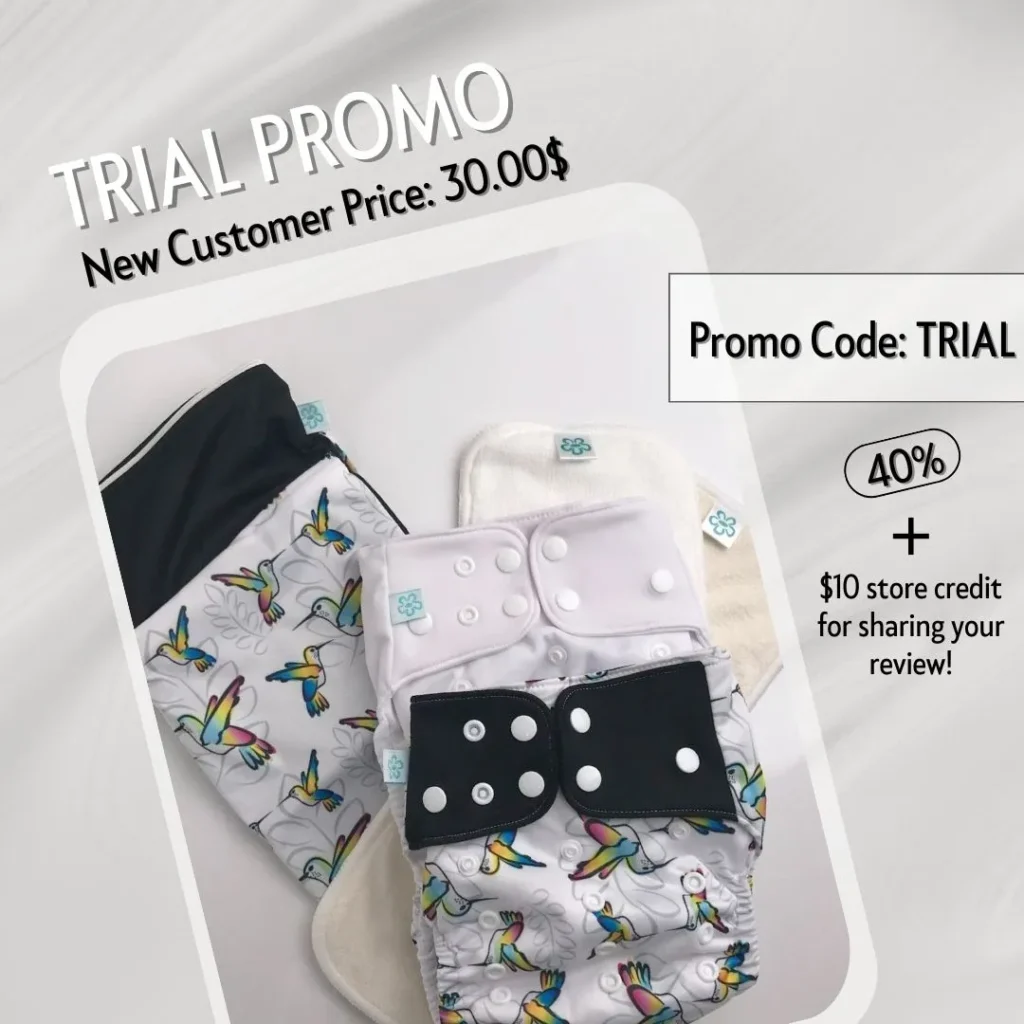
Cloth diapers are not only practical—they’re also adorable! Available in countless patterns and colors, they let parents add a touch of personality to their baby’s wardrobe. From cute animals to minimalist designs, there’s a style for every family.
The Different Types of Cloth Diapers
One of the most common questions parents ask is: “Which type of cloth diaper should I buy?” Here’s a breakdown of the most popular options.
All-in-One (AIO) Cloth Diapers
- Description: The absorbent insert and waterproof cover are sewn together.
- Pros: Very easy to use—just like disposables.
- Cons: Take longer to dry, less flexibility to adjust absorption.
- Best for: Babysitters, daycare, and parents who want maximum convenience.
Pocket Cloth Diapers
- Description: A waterproof shell with a pocket where you insert absorbent pads.
- Pros: Customizable absorbency, fast-drying, easy to adjust.
- Cons: Requires a little preparation beforehand (insertion of the insert)
- Best for: Families looking for a balance of convenience and flexibility.
Prefolds and Flats
- Description: Pieces of fabric folded and fixed with a fastening system (Snappi, pins, etc.), to which protective cover are added.
- Pros: Very affordable, easy to wash, quick to dry, perfectly fits baby’s shape.
- Cons: Requires a little practice in folding, requires the use of a waterproof or wool diaper cover.
- Best for: Budget-conscious families or those wanting a minimalist diaper stash.
Fitted Cloth Diapers
- Description: Absorbent diapers shaped like disposables, but they require a separate waterproof cover.
- Pros: Extremely absorbent, great for overnight.
- Cons: Bulkier and take longer to dry.
- Best for: Heavy wetters or nighttime use.
All-in-Two (AI2) Diapers
- Description: A reusable cover that can be paired with either cloth or disposable inserts.
- Pros: Versatile and economical, as the waterproof part can be reused more than once. Good absorption customization, quick drying.
- Cons: The inserts are in direct contact with the baby’s skin, a dry effect liner may be necessary.
- Best for: Families traveling or wanting a flexible solution.
How to Wash Cloth Diapers (Step-by-Step)
Washing cloth diapers is easier than most parents imagine. Here’s a simple routine:
- Remove solids into the toilet. For babies not yet on solids, breastfed waste can usually be washed directly.
- Store used diapers in a wet bag or diaper pail until laundry day.
- Pre-rinse in cold water to remove residues.
- Main wash with warm or hot water and a detergent.
- Drying: Line dry in the sun (great for natural stain removal) or use a dryer.
Tip: Wash every 2–3 days to keep your diapers fresh and odor-free.
How Many Cloth Diapers Do You Need?
The number of cloth diapers you need depends on your baby’s age and how often you plan to do laundry:
- Newborns: 20–24 diapers (they need more frequent changes).
- Infants (6–12 months): 15–20 diapers.
- Toddlers: 12–16 diapers.
Starting with a small stash and gradually building it is also a great option.
Cloth Diapers vs. Disposable Diapers
| Feature | Cloth Diapers | Disposable Diapers |
|---|---|---|
| Cost | 400$–600$ (reusable) | 2,500$–3,500$ per child |
| Eco Impact | Reusable, less waste | Landfill waste, non-biodegradable |
| Skin Health | Natural fabrics, fewer chemicals | May contain dyes, perfumes |
| Convenience | Wash & reuse | Easy to use, throw away |
| Style | Cute, customizable | Limited designs |
Common Myths About Cloth Diapers
- “They’re too messy.”
Modern cloth diapers use liners, snaps, and waterproof covers that make them much cleaner and easier than before. - “They take too much time.”
An extra load of laundry every 2–3 days is sufficient. - “They leak more.”
With the right fit and absorbency, cloth diapers are just as reliable—sometimes even more so—than disposables.
Frequently Asked Questions (FAQ)
Q: Can cloth diapers be used at night?
Yes! Many parents use diapers with extra inserts for overnight protection.
Q: Are cloth diapers safe for newborns?
Absolutely. In fact, their soft fabrics are gentle on delicate newborn skin.
Q: Can I use cloth diapers at daycare?
Many daycares accept them, especially if they are already ready to use.
Q: How long do cloth diapers last?
With proper care, cloth diapers can last through multiple children.
Tips for Success with Cloth Diapers
- You can mix cloth and disposable diapers at first to get used to them.
- Test a few diapers before building your final stock.
- Ask for advice: Don’t hesitate to ask other parents who use them, whether in your circle or in groups and forums dedicated to cloth diapers.
Conclusion
Cloth diapers are no longer just a niche choice for eco-conscious families. They are a practical, budget-friendly, and baby-friendly option that makes sense for many parents today. With modern designs, cloth diapers are convenient, easy to use, and undeniably adorable.
By switching to cloth diapers, you’re not only saving money—you’re also protecting your baby’s skin and helping the planet.
👉 Ready to make the switch? Explore our selection of cloth diapers at Babilibou and find the perfect fit for your little one today.